














# Prosecutor’s Office Ordered to Pay €100,000 to Yavor Zlatanov
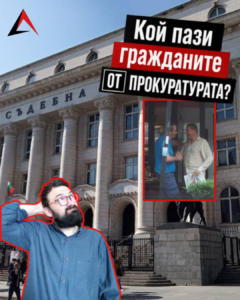
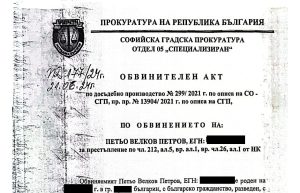
For the first time, a court has found that the actions of the Prosecutor’s Office in the “Eight Dwarfs” case, relating to the arrest of and charges brought against businessman Yavor Zlatanov, were motivated not by the objectives of a legitimate criminal investigation, but by an attempt to deprive him of his property.
This is clear from a ruling by the Sofia City Court ordering the Prosecutor’s Office to pay Zlatanov €100,000 in compensation, as reported by the legal news website Lex. The court found that Zlatanov’s detention and the charges brought against him were deliberately aimed at taking control of his business, money and valuables.
According to the court, Zlatanov’s arrest violated his right to liberty and security because the detention was not used for the purposes of a lawful investigation, but “as an instrument of coercion in a property dispute.”
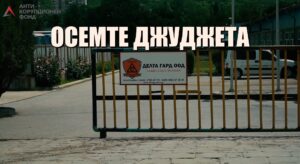
The “Eight Dwarfs” case became publicly known in 2020 through the Anti-Corruption Fund’s investigation of the same name. A link to the investigation is available in the comments.
“Taken together, the facts support the conclusion that criminal-law mechanisms were used not only for the purposes of the investigation, but also as a means of influencing the claimant’s property situation,” the court concluded.
According to the court, it is important to find a convincing explanation for the unusual level of activity by the Prosecutor’s Office, which began immediately after the involvement of new individuals and stopped immediately after the arrests and seizures.
The court paid particular attention to the return of the gold to Iliya Zlatanov, highlighting the suspicious similarity between the description of the items in his request and the description in the seizure records, which Zlatanov himself had not attended.
“This difference in institutional energy cannot be convincingly explained by ordinary procedural necessity. It shows that the actions concerning the property were at least as important to the course of the proceedings as the investigation itself, and at certain points even more important,” the Sofia City Court wrote.
The court also analysed the actions of Dimitar Petrov, then head of the Specialized Prosecutor’s Office, noting that his conduct was rushed and differed from normal collegial practice. Among the circumstances cited was the rapid organisation of the return of the gold and money seized from Zlatanov. According to the court, these actions do not in themselves prove Petrov’s underlying motives, but they do confirm the unusual nature of the institutional conduct.
“The court does not find that every action lacked a legal form, but rather that the legal form was used to achieve an outcome that is not among the permissible purposes of Article 5 of the European Convention on Human Rights.
This conclusion is not based on a single procedural violation, but on the accumulation of mutually reinforcing indications which, considered as a whole, reveal a purpose behind the actions that differs from the one officially stated,” Judge Zapryanova wrote in her reasoning.
The ruling is not final and may be appealed before the Sofia Court of Appeal.
The “Eight Dwarfs” case became publicly known in 2020 through the Anti-Corruption Fund’s investigation of the same name.
Support the Anti-Corruption Fund with a one-time or monthly donation.
With your help, we can continue exposing the truth about criminal networks within Bulgaria’s justice system — and demanding that institutions be held accountable.