
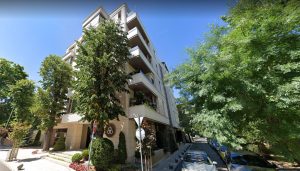
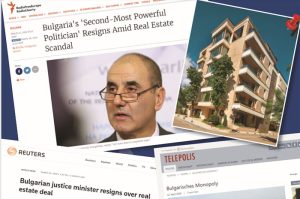
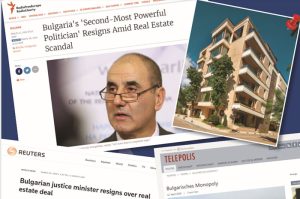
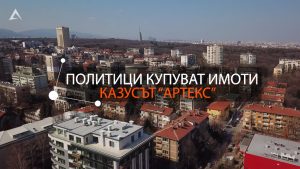


Position of the ACF: The Prosecutor’s Office refuses an in-depth investigation of the “Apartmentgate” case
On 27th of May 2020 “Boets” association announced that the Specialized Prosecutor’s Office refused to initiate pre-trial proceedings after the association filed a report about alleged criminal offenses concerning a real estate acquisition by MP Tsvetan Tsvetanov.
The published decision about the refusal raises serious concerns about the way The Prosecutor’s Office conducted its inquiry and the conclusions it reached:
1) Establishing the relevant facts in the case has been limited to a superficial description of the transactions’ well-known circumstances – location of the properties, announced prices, and dates. However, the prosecutor’s decision does not contain a study of the circumstances raising the most considerable suspicion of possible criminal offenses – the significant difference between the announced price of the property acquired by Mr. Tsvetanov and the real estate prices in the area in this period, and Mr. Tsvetanov’s activities as a Member of Parliament, possibly affecting the construction company. The decision also states that tax audits were carried out on Mr. Tsvetanov and his wife as individuals, and on the company Artex Engineering, but there is no account or analysis of the facts established after these audits.
2) There are practically no legal opinions in the Prosecutor’s Office’s decision. There are only comments that, according to the prosecutor, there is no evidence of various cited common criminal offenses, which cannot replace the legal opinions as to why specific facts are considered justifying or not justifying conclusions.
3) The decision also states that the inquiry’s subject was identical to that of an inquiry from November 2019, which ended with a refusal to initiate pre-trial proceedings. One of the grounds for the current refusal to initiate criminal proceedings is, indeed, that such proceedings were refused in another case on an identical subject. In the last year, we have witnessed the tremendous public interest and repeated queries to the Prosecutor’s Office of the Republic of Bulgaria about the results of the various inquiries on the “Apartmentgate” case. We have also witnessed how the institution publicly presented a wealth of evidence about even ongoing investigations. Given this, it remains unclear why, for half a year, this inquiry’s result has not been made public. We cannot but conclude that the public learned about this case now only because the Criminal Procedure Code requires that the Prosecutor’s Office notifies the sender of the report, “Boets” Association, about its refusal to initiate pre-trial proceedings. Otherwise, despite the significant public interest, no information would have been published, as with the rest of the “Apartmentgate” cases.
4) Under the Judiciary Act, the time-limits to conduct inquiries and collect sufficient data for instituting criminal proceedings are indeed instructive. Still, in the present case, we cannot but mention that they have been exceeded many times.
We call for an administrative control by the Appellate Specialized Prosecutor’s Office on the final prosecutor’s decisions on both inquiries on the subject. We also demand that the Prosecutor’s Office of the Republic of Bulgaria provides detailed public information about its actions in every case of high public interest, and not only when it deems it necessary, following entirely unclear criteria.