For years, Kovachki has denied being the real owner of key energy companies such as the coal-fired power plants (TPPs) Brikel and Bobov Dol, presenting himself as their consultant.
For the first time, internal documents provided to the ACF from the companies’ archives list Kovachki as the real head of an invisible energy holding company with an annual turnover of over BGN 5 billion. The conglomerate comprises eleven power and heating plants, several mines, numerous companies trading in gas, electricity, carbon emissions, and biomass, as well as pension and insurance funds, as well as transport and repair companies.
The investigation, titled Mr. Grass Head’s Holding Company, presents internal documents containing evidence of:
– Coordinated actions by energy companies in Kovachki’s cartel and manipulation of prices on the free electricity market.
– Siphoning off the profits of the holding’s thermal power plants through fictitious transactions with so-called “buffer companies”.
– Concealing over BGN 900 million in undistributed profits for 2023 alone from the companies in the holding and non-payment of hundreds of millions owed for social security contributions and taxes, which the institutions remain blind to (Kovachki’s coal mines are among the largest debtors to the National Social Security Institute).
– Payment of unlawful “financial incentives” to state officials by companies in the holding; granting six-figure loans to politicians.
– Control over senior managers in the structure and politicians by obliging them to pay millions of leva with promissory notes to the holding companies.
– Returning money under the table in fictitious biomass supply deals for carbon emissions fraud schemes.
– Leaks of information about upcoming inspections by the European Public Prosecutor’s Office to the holding’s management.
Grass Head’s Holding Company, managed with children’s stamps
The holding company’s documents are approved with specially made stamps featuring cartoon characters, which employees within the system know to be Hristo Kovachki’s de facto personal signature.
“If you see a stamp, it’s God’s law,” says an employee of the holding company, whom ACF contacted for confirmation. The stamps are changed periodically, as in secret organization, and their replacement is approved by order of the chief. All of his orders come from the same email address: chichkotrevichko112@gmail.com.
Although there is a ban on mentioning Kovachki’s name in writing, the ACF also has documents in which it appears, as well as information that the businessman visits the holding company’s central office every day, located at 34 3020 Street in the Moderno Predgradie neighborhood of Sofia. Internal documents also show schedules approved by Kovachki for weekly meetings between him and the heads of the most important, supposedly unrelated companies in the holding company – in Reception No. 2 on the 6th floor of the building at 3020 Street.
Formally, the companies are managed by highly paid managers. In practice, however, Kovachki makes every important decision, and the managers have signed promissory notes worth millions to the companies they supposedly manage.
For example, Desislava Filipova, Hristo Kovachki’s PR manager and owner of a total of 16 companies in the holding, has signed a promissory note for BGN 2.5 mln. Dimitar Ivanov, former head of Kovachki’s security and director of Tibiel EOOD, one of the largest gas traders in the holding, owes BGN 3 mln.
Offshore companies and evidence for a cartel
Over 70 of the holding companies are registered outside Bulgaria. Many of the coal-fired power plants – in Bobov Dol, Pernik, Pleven, Ruse, and Burgas, as well as the mines in Stanyantsi, Beli Breg, and Chukurovo – are British-owned. The district heating companies in Sliven, Veliko Tarnovo, Gabrovo, and Vratsa are registered in Cyprus, while the owner of the mine, Cherno More-Burgas, is registered in the Seychelles.
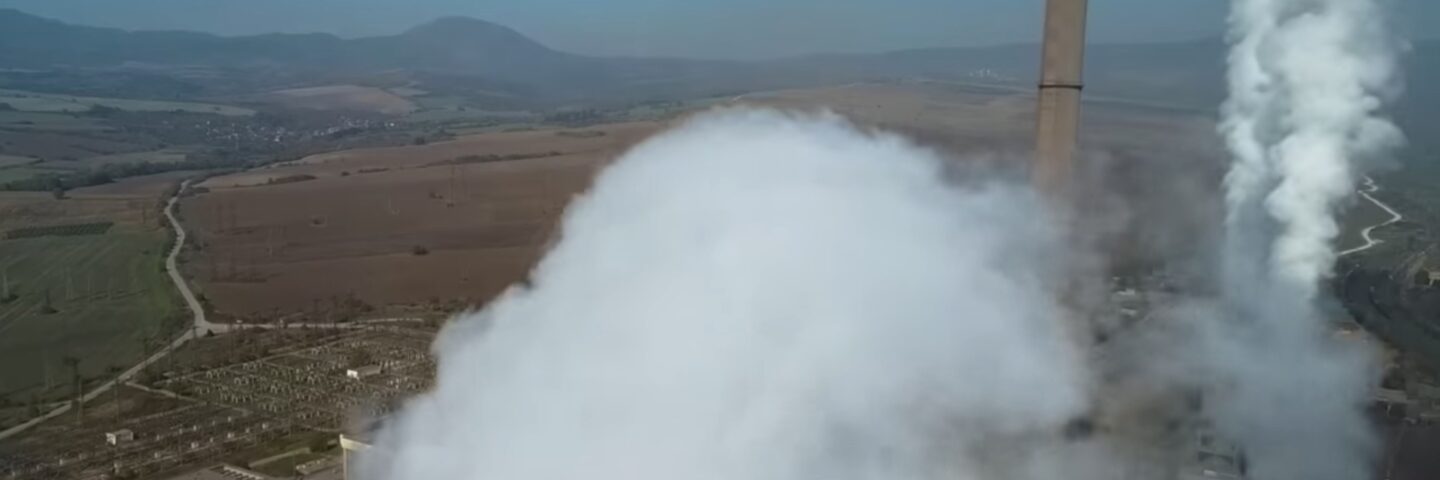
“Offshore registrations make it difficult to trace ownership and impose administrative sanctions on some of Bulgaria’s biggest polluters,” said Lora Georgieva, a member of the ACF’s legal team. “One example is the Brikel TPP, which received 16 administrative sanctions for air pollution in the town of Galabovo in 2022 alone.”
The documents clearly show that despite the lack of formal links between them, the companies in the holding operate in sync. The ACF has an order from 2022 instructing the managers of the Bobov Dol TPP to sell its electricity to Nomad Energy for BGN 176 MWh – three and a half times lower than the average price at the time.
“This deal contradicts market logic. However, through such deals, a significant portion of the profits in the holding company is diverted from the Thermal Power Plants that produce the electricity to the so-called buffer companies that trade in electricity. This way, the profit is hidden, and the energy producers officially operate at minimal profit or even at a loss,” Georgieva said.
In 2022 alone, Nomad Energy sold electricity from the holding’s power plants for a record BGN 2.7 bln. and reported a profit of BGN 241 mln. The company is just one of several buffer companies, suppliers, and traders that, through fictitious transactions and loans among themselves, help keep the undistributed profits of the entities in the holding company—worth over BGN 900 million for 2023—almost completely hidden from the state.
Part of the profits of the buffer companies are returned to the large enterprises in the holding in the form of multi-million loans. Numerous documents indicate that a portion of the profits is exported from Bulgaria through service contracts with companies registered abroad, such as those in Dubai.
The hidden holding company also harms the public interest through the cartel-like relationships established among the companies within it. The coordinated actions of energy traders linked to Kovachki create conditions for market distortion and higher electricity prices, which are passed on to consumers in the form of higher prices for a wide range of goods and services.
“The investigation raises extremely serious questions about abuses that harm the interests of citizens on several levels: higher prices for electricity and heating, lack of investment in modern and cleaner technologies, unpaid taxes, and social security contributions amounting to millions,” Georgieva said.
“The information we have about financial relationships with representatives of the public administration and political parties also suggests an answer to the question of why the authorities have been so passive, essentially failing to investigate the Orion holding company and its management.”
How are government officials and politicians “financially incentivized?”
The investigation reveals a document from December 2023 proposing to provide “additional financial incentives” of BGN 2,000 per month to the chief architect of Bobov Dol Municipality for “quick and smooth preparation and approval of documents” for the Bobov Dol TPP — the largest one of the holding’s power plants. According to ACF information, Vasilev currently holds the position of “chief architect of the Bobov Dol Municipality,” although he was appointed director of the National Institute for Immovable Cultural Heritage at the end of April 2025.
The investigation revealed that PPDB MP Dzhipo Dzhipov issued promissory notes totaling nearly BGN 2 million to companies associated with the holding company. Additionally, there is a still-active loan of BGN 800,000 that was granted to Dimitar Abadzhiev, a former politician from the SDS, DSB, RZS, and “Bulgaria Without Censorship” parties. Abadzhiev has a long history as a Member of Parliament and diplomat.
An internal document, issued shortly before the early elections in 2022, contains an order from Kovachki to all directors of companies in the holding to submit “proposals for trusted persons to be included in the lists of political parties.” The proposals should be sent again to the familiar email address – chichkotrevichko112@gmail.com.
Witness accounts published in the ACF investigation reveal that information about the European Public Prosecutor’s Office’s planned inspections and searches of Kovachki’s power plants in 2023 was leaked to him in advance, and evidence of abuse was destroyed.
“We call on all competent authorities to take timely and responsible action to investigate the information that has been disclosed,” said Boyko Stankushev, director of the Anti-Corruption Fund.
More information and copies of all analyzed documents are available on the ACF website.
Mr. Grass Head’s Holding Company is the first part of the ACF’s investigation into Hristo Kovachki’s invisible cartel.
Link to the video investigation: https://www.youtube.com/watch?v=Ngrh3d0WkZQ
To be continued.